
 Get In Touch
 (423) 355-1091
A bad storm rolls through, the rain stops, and from the front yard, everything looks fine. The car’s still there, the trees are standing, and there’s no obvious damage anywhere. So you go back to your day. The thing is, most hail and wind damage doesn’t show itself the way homeowners expect.
The problem is, most Storm damage Roof Repair from hail and wind doesn’t show itself the way homeowners expect. It often hides on the roof above your head, slowly turning into leaks, mold growth, and expensive repair bills you didn’t see coming. It hides on the roof above your head, slowly turning into leaks, mold, and replacement bills you didn’t see coming. Knowing how to spot hail or wind damage before it gets that far is one of those skills every homeowner in storm-prone areas should have, especially if you live somewhere like Chattanooga, where serious weather rolls through several times a year. The damage is often invisible from the ground but obvious to anyone who knows what to look for, and catching it early protects both your home and your insurance options.
We get a lot of post-storm calls every spring and summer. The pattern is almost always the same. Homeowners who acted fast had successful repairs and clean insurance claims. Homeowners who waited weeks or months ended up dealing with leaks, denied claims, and damage that should have been simple but became expensive.
Why Storm Damage Hides So Well
Hail and wind damage on a typical roof rarely looks dramatic. Hail doesn’t punch holes through shingles in most cases. Wind doesn’t blow off the entire roof. Both forms of damage usually show up as smaller things that combine to weaken the roof and create leaks over weeks or months.
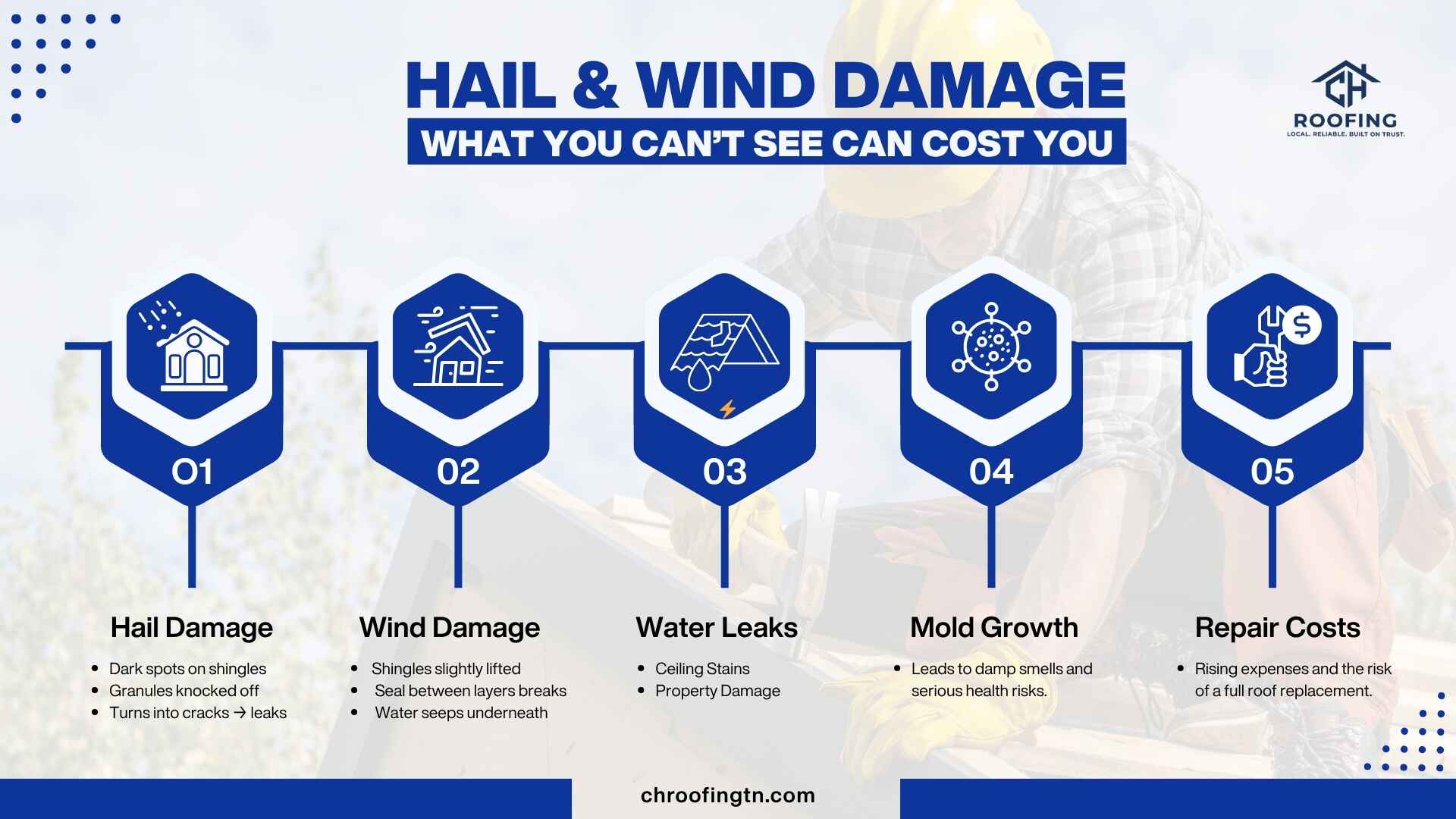
Hail bruises shingles. The bruise looks like a small dark spot where the granules have been knocked off. The asphalt underneath is exposed, which means UV rays start breaking down that spot faster than the rest of the roof. Within a few months, the bruise becomes a soft crack. Within a year or two, it’s a leak point.
Wind lifts shingles. Even a slight lift breaks the seal between rows of shingles. The next time it rains hard, water gets driven under the shingles instead of running off them. The decking underneath gets wet. Repeated cycles cause rot.
Neither of these is obvious from the front yard. Both are easy to spot from a ladder or by an experienced eye.
Step One: Look at What You Can See From the Ground
Start with the obvious. Walk around your home after any major storm and look up. From the ground, you can usually spot:
- Missing shingles (look for lighter rectangles where the underlayment is exposed)
- Lifted or curled shingles
- Damaged ridge caps along the peaks
- Bent or dented gutters and downspouts
- Damaged metal vents, exhaust caps, or skylights
- Tree branches resting on the roof
- Pieces of shingles on the ground around your home
- Visible damage to chimney caps or flashing
Use binoculars if you have them. Take photos of anything that looks off. Even small visible damage is worth documenting.
Step Two: Check Your Gutters and Downspouts
Your gutters tell you what’s happening on your roof. After a hail storm, you’ll often find piles of granules washed off the shingles. Some granule loss is normal during heavy rain, but a lot of it indicates damage. The granules look like dark coarse sand and accumulate in the gutter splash zones and at the bottom of downspouts.
Also, check the gutters themselves for dents. Hail strong enough to dent aluminum gutters is strong enough to bruise shingles. If your gutters look pockmarked, the roof above them probably is too.
Step Three: Inspect Inside Your Attic
The attic is one of the best places to catch hidden damage early, and most homeowners never check it. Take a flashlight and look for:
- Daylight visible through the roof
- Water stains on rafters, decking, or insulation
- Wet spots on insulation
- Drips or water accumulating after a rain
- Signs of mold growth
- Musty smells
- Small piles of granules below vents or pipes
- Damp wood that shouldn’t be damp
If you find any of these, the roof has been letting water in. Time to call a professional.
Step Four: Look Around the Inside of Your Home
Some signs of roof damage show up inside the house. Walk through every room and look up at the ceilings, especially in:
- Rooms directly under the roof
- Around chimneys or fireplaces
- Near skylights
- Around bathroom and kitchen vent fans
- In closets and storage spaces that don’t get checked often
- Along the edges of ceilings near exterior walls
You’re looking for stains, bubbling paint, sagging drywall, or damp spots. Any of these mean water has been getting in for a while.
Step Five: Walk the Yard
The yard often has clues you’d miss otherwise. Look for:
- Pieces of shingle, especially small chunks of asphalt
- Ridge cap pieces that blew off
- Bent or broken vent caps that fell from the roof
- Tree branches that look freshly broken
- Granule patches washed onto the ground from the gutter splash zone
- Damaged outdoor furniture or fixtures
Photograph any debris you find. It’s part of the documentation if you end up filing a claim.
When to Call a Professional Inspector
You can do a lot from the ground, but a real assessment requires getting on the roof safely with the right experience and tools. Call a roofing services professional within a few days of any major storm if:
- Your area was hit by a hail of any size
- Wind speeds were over 50 mph
- Do you see any visible damage from the ground
- You found granules in your gutters
- Do you see any new ceiling stains inside
- Your roof is more than 10 years old (older roofs are more vulnerable)
- A neighbor has confirmed roof damage
- You’re filing or considering an insurance claim
A professional inspection takes 30 to 60 minutes and gives you a written record of conditions tied to the storm date. That documentation is valuable for both repair planning and insurance.
What an Inspector Looks for That You Can’t See
When a professional gets on the roof, they’re looking for things that are nearly impossible to spot from the ground. The list includes:
- Bruised shingles where the asphalt beneath the granules is damaged
- Cracked shingles that have lost structural integrity
- Lifted shingle seals that will fail in the next storm
- Damaged underlayment under loose shingles
- Compromised flashing around chimneys, vents, and walls
- Hail dents in soft metal vents and roof caps
- Damage to ridge vents
- Damaged pipe boots and seals
- Hairline cracks in skylight frames
- Damaged gutter spikes and hangers
Each of these is a future leak point. Each is fixable if caught early. Each becomes much more expensive if left alone.
Why Insurance Timing Is Critical
Insurance carriers pay close attention to timing on storm damage claims. Most policies have specific time limits for filing, and even when you’re within the technical window, waiting too long can hurt your claim. The longer the gap between the storm and the claim, the harder it is to prove the damage was caused by that specific event.
Insurance adjusters are looking for evidence that:
- The damage was caused by a covered event
- The event happened on a specific date during your policy period
- The damage is recent rather than old wear
- You didn’t make the situation worse by neglecting it
A professional inspection report dated within a few days of the storm gives you all of that. A claim filed three months later with no documentation is much harder to defend.
What to Do Right After a Major Storm
If you’ve just been through a serious hail or wind event, follow this order:
- Make sure everyone is safe, and the home is structurally sound
- Take photos from the ground of any obvious damage
- Note the date, time, and severity of the storm
- Check your insurance policy for time limits on storm claims
- Schedule a professional roof inspection within a few days
- Get a written report and photos from the inspector
- File the insurance claim with the report attached
- Make only temporary repairs (tarps, plywood) before the adjuster sees the damage
- Save all receipts for emergency repairs
- Wait for adjuster approval before starting permanent repairs
That sequence protects both your home and your wallet.
Common Mistakes Homeowners Make
A few specific mistakes come up over and over after storms:
Waiting too long. The single biggest mistake. People wait weeks or months because nothing looks obviously wrong, and by then the damage has spread, and the insurance window has tightened.
Calling a roofer who pressures them. Some storm-chasing roofing companies show up after every major storm, pushing free inspections and immediate signing. Be cautious. Use established local roofers with reputations and warranties.
Trying to inspect the roof themselves. Walking on a wet or damaged roof is dangerous. Leave the actual inspection to someone with the right experience and safety equipment.
Patching with the wrong materials. Roof repair products at hardware stores often don’t hold up long-term. A bad patch can void warranty coverage and create more problems than it solves.
Filing a claim without documentation. Showing up to your insurance carrier with nothing but a phone photo and a story is the wrong way to start a claim. Get the inspection first.
Wrapping Up
Hail and wind damage are sneaky. They hide in parts of your home you can’t see, and they get worse over time, even when you can’t tell they’re there. The homeowners who come out fine are the ones who check after every major storm and call a professional when something seems off. The ones who get hit hardest are the ones who waited because nothing looked wrong from the front yard. Getting in the habit of post-storm inspections is one of the best things you can do for your home.
When you’re ready to have someone take a careful look at your roof, we’re happy to come out, do a thorough inspection, and document anything that needs attention. At CH Roofing, we work on Chattanooga area roofs every week, and we know exactly what storm damage looks like and how to handle it correctly. Give us a call when you’re ready, and we’ll take care of it.


